Spain; A Playground for the Rich and Famous. Tips for Buying a Second Property
11th Jun 25 · Last updated 7th Sep 26 · 12 MIN READTips for buying a second home in Spain, highlighting the most popular high-net-worth locations, lifestyle advantages, and key considerations for international buyers exploring luxury property across the country’s prime regions.
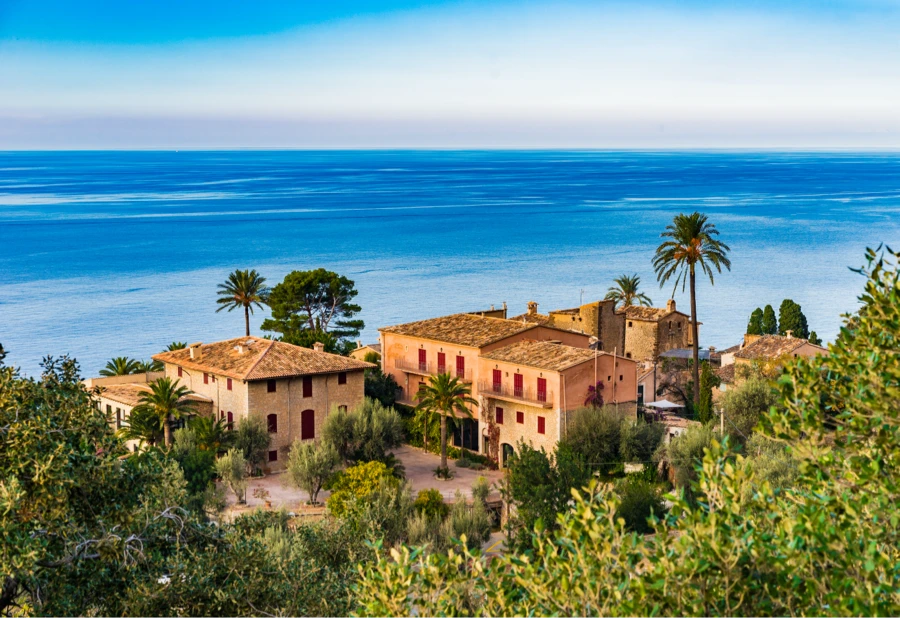
Enjoying over 300 days of sunshine each year, with around 3,000 miles of beautiful coastline, it’s little wonder that nearly a million Britons own a property in Spain, with expats from across the globe making up a sizeable chunk (12%) of the overall population.
The cost of living in Spain is significantly lower than many other western countries. The Spanish capital of Madrid ranked 83rd in Mercer’s 2023 cost of living survey, with Barcelona at 75th, a noticeable difference against London, which came in at 17th most expensive. And if you’ve got kids, the quality of education is excellent, with an OECD score of 491 in reading literacy, math’s, and sciences, above the average score of 486.
A Huge Choice of Desirable Locations for HNW Homes
The Costa del Sol boasts a fantastic climate, stunning beaches, and a variety of amenities. Resorts like Marbella with its elegance and opulence offer a top choice for those seeking a life of luxury. For those seeking a more relaxed vibe towns such as Mijas Pueblo offer pretty streets, traditional whitewashed walls and elevated views overlooking the coast.
Where Do the Richest People Live in Spain? (Most Affluent Areas)
Spain has several municipalities and neighbourhoods consistently ranked as the richest, based on average income, luxury property values and high concentrations of wealthy residents. These include:
- Pozuelo de Alarcón (Madrid) – The richest municipality in Spain. Home to executives, entrepreneurs and celebrities.
- Boadilla del Monte (Madrid) – High-income families and luxury gated communities.
- La Moraleja (Madrid) – One of Spain’s most exclusive residential areas.
- Sant Cugat del Vallès (Barcelona) – High-income suburb with excellent international schools.
- Pedralbes (Barcelona) – The wealthiest neighbourhood in Barcelona.
- Sarrià-Sant Gervasi (Barcelona) – Extremely affluent district with upscale homes.
- Matadepera (Barcelona province) – Frequently listed among the richest towns in Spain.
- Marbella – La Zagaleta & Sierra Blanca (Costa del Sol) – Two of the most exclusive luxury enclaves in Europe.
- Castelldefels (Barcelona coast) – Popular with elite athletes and high-net-worth families.
- San Sebastián (Basque Country) – One of the wealthiest cities in Spain with premium property prices.
- Son Vida, Port d’Andratx & Deià (Mallorca) – Some of Spain’s most prestigious and expensive residential areas.
Despite its party reputation Ibiza offers more than just nightlife, with a picturesque setting and a vibrant community. The enchanting island has become a magnet for the mega rich with high end restaurants, beach clubs and extravagant yacht parties. It's also a hotbed for yoga retreats and spiritual wellness. Celebrities like Cristiano Ronaldo and Justin Bieber frequent the island regularly.
The island of Mallorca (Majorca) offers stunning landscapes, charming villages, a variety of historical landmarks and a pleasant climate, as well as picture-perfect beaches with clear waters. With an abundance of English language schools and millions of tourists yearly, it’s easy to see why 19% of the population are non-Spaniards. It’s hardly surprising that the Sunday Times named Palma as the best place in the world to live.
Although not a coastal resort, Barcelona is a top spot for wealthy foreigners and expats due to its eclectic mix of culture, arts, and architecture. Barcelona's reputation as a favourable place to do business is a major contributor to its emergence as a hub for the wealthy. Exclusive neighbourhoods include Pedralbes, Sarrià-Sant Gervasi and L’Eixample.
Madrid is another stand out. This food lover’s paradise offers a diverse nightlife ranging from trendy rooftop bars to flamenco shows, and an excellent transportation system. El Viso, Recoletos, Castellana and Piovera, are some of the most prestigious areas in which to buy.
The Basque Country is a region boasting a range of beautiful destinations. Straddling the French-Spanish Atlantic border, this region has its own language, music and cuisine, offering a rich and unique cultural experience. With a diverse landscape, from rolling hills to steep valleys and meandering rivers, as well as award-winning beaches, this area has something for everyone. Gaztelugatxe, which featured in the penultimate series of Game of Thrones, is a tiny island situated off the coast with a 10th century Hermitage on its peak. San Sebastián to the east offers several Michelin starred restaurants and internationally acclaimed events, including the San Sebastián International Film Festival and the San Sebastián Jazz Festival.
Richest & Most Exclusive Areas in Spain (Quick Guide)
| Location | Region | Why It’s Wealthy |
|---|---|---|
| Pozuelo de Alarcón | Madrid | Highest income levels in Spain |
| La Moraleja | Madrid | Elite gated mansions; celebrity residents |
| Pedralbes | Barcelona | Most expensive neighbourhood in Barcelona |
| Matadepera | Catalonia | One of the wealthiest towns by income |
| La Zagaleta | Marbella | Europe's most exclusive gated community |
| Sierra Blanca | Marbella | Ultra-luxury villas and peak privacy |
| Son Vida | Mallorca | Premium golf estates and super-prime homes |
| San Sebastián | Basque Country | Consistently high income levels |
How Does the Property Buying Process Differ in Spain?
The Spanish property conveyancing system is quite different to other European countries. The process begins with a reservation agreement to freeze the purchase price and take the property off the market for 30 days. At this stage you’ll make a down payment of around 1% to 5% of the property price.
Within the next 10 days, a full contract is drawn up between the buyer and seller, this is similar to exchange of contracts within the UK. During this time your lawyer will conduct property searches to check ownership, ensure there are no existing mortgages or charges against the property, and ensure planning permissions are in order. At contracts stage, you’ll need to release a deposit, usually between 10% and 20% of the property price. Once the contracts are signed, you’re essentially committing to pay the balance of the price. At this stage if you pull out, you’ll forfeit your deposit. The seller stands to lose even more, liable for double the amount of deposit as compensation if they decide not to proceed.
The formal completion of the property sale occurs when the title deed is signed, this must take place before a public official called a notary. Alongside the agreed final payment, all relevant purchase taxes are settled. The notary then presents the title deed to the Land Registry for registration, officially transferring ownership to the new owner. Final registration can take several months.
Please note, buying off-plan property inevitably involves higher risk than buying re-sale property. One key difference is that when buying off-plan, developers are legally obliged to secure all deposits with a bank guarantee. There’s much more to it than this of course and you should seek proper legal advice on the process for buying off plan.
How Can I Ensure my Transaction is Processed Seamlessly?
Of course in general the buying process is nothing to be scared of, but sometimes, often reporting in the press there are challenges. So it’s best to understand where potential problems or issues may stem from?
- Use Reputable Professionals: It’s sensible to look for an independent lawyer who specialises in Spanish land law. Make sure they’re working on your behalf only and separate from the interests of the agent or developer to avoid conflicts of interest. If your lawyer is based in Spain, ask for their registration number, and check they’re registered (and practising) with the local bar association. If you choose to work with a British lawyer check that they have experience operating in Spain, are registered with the Law Society in the UK, and specialise in international transactions. The same goes for estate agents, who need to be carefully vetted. Beware of scams such as illegal constructions, land grabs (property built on land that doesn’t have proper planning permission or is not approved for development by the local authorities) and investment scams from cyber criminals.
- Get Your Documentation in Order: A NIE is a personal identification number required in order to carry out any fiscal transaction in Spain such as opening a bank account or buying a property. Foreign nationals are assigned a NIE number on registering as a resident in Spain, or property buyers from outside Spain can apply for a NIE at the Spanish embassy in the UK or through a representative. Whilst not strictly obligatory, having a Spanish bank account simplifies the process and helps ensure compliance with legal requirements such as verifying the legitimacy of funds.
- Beware of Maintenance Charges: All properties in Spain come under horizontal property laws. This means that if you buy a flat or an apartment you will automatically become part of the communal ownership of the building and will therefore have rights and responsibilities towards its maintenance.
- Check the Construction: It’s important to get a survey if you’re buying a property in Spain, to check the current condition of the property and any works undertaken by the previous owners. This is possibly more prudent for country residences or detached houses than apartment blocks, but still worth carrying out for your own peace of mind.
- Avoid Unexpected Taxes: Taxation is a complex issue in Spain, and taxes associated with buying, selling, and renting property can vary widely from one region to the next, therefore it’s advisable to seek the advice of a specialist, accountant or professional tax advisor.
What About Financing a High-Value Property Purchase in Spain
Domestic mortgage providers in Spain have been extremely risk-averse since the 2008 financial crisis, less interested in what they deem risky high-net-worth property investors or those looking for a second home in Spain. This means more restrictive criteria for foreigners, for example, most won't accept foreign property as collateral for a loan or consider those without regular incomes such as retirees (even those with significant assets). Even the wealthiest individuals can therefore find themselves with poor or limited options. Spanish banks will scrutinise your credit rating and ask for a variety of documents, often requiring translation, which can be very time consuming. And if you’re a non-resident, Spanish lenders will typically only lend around 50%-60% of the price of the property.
International lenders tend to be more flexible, usually considering your global situation and overall wealth, regardless of where your assets or property is located. As a result, you may find that these lenders offer more competitive deals.
For these reasons often a broker is right partner to help you access a full range of international lenders who can tailor a bespoke mortgage for your specific or unique circumstances, ensuring your complete portfolio of worldwide assets is used to get you the best arrangement. Additionally, they can help ensure that the structuring of your Spanish mortgage for non-residents is both tax-efficient and cost-effective.
If you’re moving to Spain for good, you’ll also need a lender who can take into account the specific needs and circumstances of expatriates. Once again its important to note a broker will help you find lenders who understand the unique financial situations of individuals living outside their home country, taking into consideration factors such as income earned in a foreign currency, residency status, and credit history. Pursuing this route individually can often be fruitless as the market can be difficult and time-consuming to navigate.
Is a Property in Spain a Good Long Term Investment?
Spain has a strong and diversified economy, following a series of reforms by the government, and this makes it an attractive proposition for foreign investors. Additionally, its developed infrastructure and competitive labour market make it a favourable business environment. The economy remains steady too, with GDP forecast to expand by 1.7% in 2024 and 2.0% in 2025. And with rental yields as high as 8.67%, a property in Spain can be a lucrative investment.
A Spanish property is an asset that can be leveraged as an opportunity for equity later in retirement, too. House prices are rising steadily in Spain and equity release allows owners to access the increased value of their Spanish property. Many retirees in Spain are equity rich but capital poor, so it's a tempting alternative for those wanting to feel the benefit of their assets before they die, or simply access cash to help their children or loved ones today rather than leaving property in their will which will be subject to inheritance tax.
In the short term a Spanish property provides an idyllic escape for you and your family, with year-round sunshine and an excellent standard of living, but it can also be a very lucrative investment for the future. At Enness Global we are specialists in helping individuals buy high-value property overseas, for further information please get in touch.
FAQs
1. Where do rich people live in Spain?
Wealthy individuals tend to favour areas such as Marbella, Ibiza, Mallorca (especially Deià and Andratx), and Barcelona’s Pedralbes and Sarrià-Sant Gervasi neighbourhoods. These locations offer luxury real estate, privacy, international schools, and lifestyle infrastructure tailored to affluent residents.
2. What are the richest cities or regions in Spain for property investment?
Marbella, Madrid, Barcelona, and Palma de Mallorca consistently rank among the wealthiest areas. They attract international investors due to a blend of prestige, robust infrastructure, and access to premium services such as private healthcare, global education, and exclusive leisure options.
3. Is Marbella still a hotspot for luxury property buyers?
Marbella remains one of the top destinations for HNWIs in Europe, offering a combination of luxury real estate, tax-efficient residency options, and a well-established expat community. Demand for prime property remains strong, especially in gated communities such as La Zagaleta and Sierra Blanca.
4. Can foreigners finance a second home in Spain through an international lender?
While Spanish banks often impose strict criteria on non-residents, international lenders are more flexible and can assess your global wealth. Working with a specialist broker is essential to access private banks offering cross-border mortgages and competitive terms.
5. What taxes should high-net-worth individuals consider when buying property in Spain?
Beyond standard property purchase taxes, HNWIs should assess wealth tax exposure, inheritance tax implications, and the potential benefits of structuring ownership through vehicles such as trusts or corporate entities. Tailored advice from a tax specialist is strongly recommended.
Get in the Know
Subscribe to our newsletter
The views and opinions expressed in this piece are those of the author and do not constitute advice or a recommendation. They do not necessarily reflect the official policy or position of Enness and are not intended to indicate any market or industry viewpoints, or those of other industry professionals.

Related Blog Posts
View All Read MORE
3rd Mar 26 - 8 MIN READ
Buying Property in Switzerland - Accessing One of Europe’s Most Exclusive Markets
 Read MORE
5th Nov 25 - 7 MIN READ