
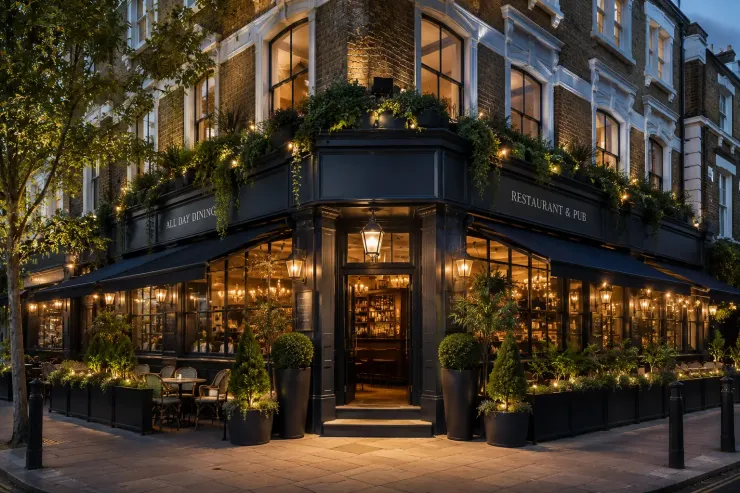
- Client: London-based hospitality start-up founded by an experienced management team
- Challenge: Securing funding for a significant venue fit-out before trading had commenced
- Loan Amount: Circa £1.4M proposed bridging facility
An experienced hospitality team approached Enness Global seeking funding to support the launch of a new premium restaurant and pub concept in London. Although the founders had extensive experience within the hospitality sector and had developed a detailed business plan, the company had not yet begun trading, meaning there was no historic financial performance for lenders to assess.
The funding was required to complete the fit-out of the premises ahead of opening, allowing the business to progress from development into operational trading.
Pre-revenue hospitality businesses can present challenges for many traditional lenders. Without an established trading history, mainstream banks may be reluctant to fund significant capital expenditure, particularly where repayment is expected to be supported by future business performance rather than existing cash flow. Lender appetite may therefore depend on factors including the experience of the management team, the quality of the underlying security and the overall strength of the proposed business plan.
Enness introduced the founders to a specialist lender with experience providing short-term funding for commercial projects requiring flexible structuring. A circa £1.4M bridging facility was proposed over a term of approximately 24 months, providing funding towards a substantial proportion of the venue fit-out costs, with the remaining project costs supported by founder equity.
The proposed facility was structured against appropriate security and designed to allow funding to be drawn as development costs were incurred, with a planned exit through longer-term commercial refinancing once the business had established a trading record.
The proposed funding structure demonstrated how specialist bridging finance may be considered for experienced operators launching new commercial ventures where traditional lenders may have limited appetite. Any facility would remain subject to lender approval, due diligence and the individual circumstances of the transaction.
This case highlights the considerations involved when arranging short-term finance for a pre-revenue commercial business undertaking significant capital investment. Factors such as management experience, available security and the proposed exit strategy may all form part of a specialist lender's assessment.
BRIDGING FINANCE IS SHORT-TERM BORROWING AND REQUIRES A CREDIBLE EXIT STRATEGY. DELAYS TO THE SALE OR REFINANCING OF PROPERTY MAY AFFECT THE EXIT AND OVERALL COST OF BORROWING.
Information contained in our case studies is for market and illustrative purposes only. In some cases, these may be made up of multiple cases and are for illustrative purposes only.
Some case studies are made up of enquiries that have come into the business, not all business completes, and the posting of a case study does not represent a completed piece of business.
Property values can fall as well as rise, and you may not get back the amount originally invested. Property investments can be illiquid and may take time to sell. Where borrowing is used, your property may be repossessed if you do not keep up repayments on a mortgage or other loan secured against it.