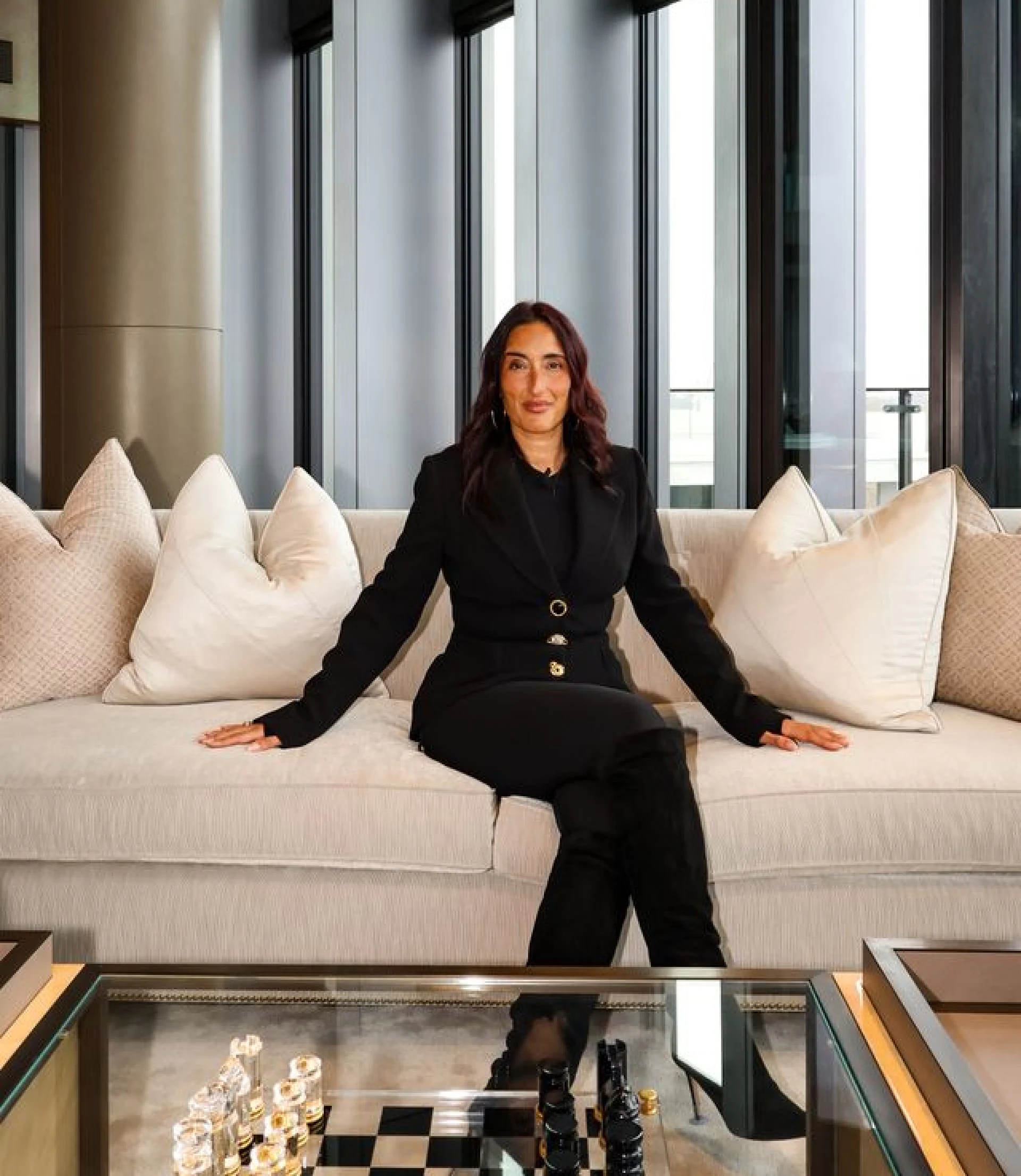
Interview with Becky Fatemi, Executive Partner at Sothebys International Realty UK
5th Jan 26 · Last updated 20th Aug 26 · 4 MIN READBecky is a globally renowned London property advisor and Executive Partner at Sotheby’s International Realty, specialising in the property requirements of UHNWIs worldwide. Widely regarded as one of the industry’s most trusted and professional advisors, she is known for her discretion, exceptional service and unparalleled global network.
You’ve said that “wellness is the new wealth indicator”. What first signalled to you that wellbeing had become a core driver of luxury property decisions?
The clearest signal was when wellness began influencing decisions beyond the home itself. When private members’ clubs, wealth advisors, and traditionally social institutions started reorienting around health and longevity, it became clear this wasn’t a passing lifestyle trend.
TRAMP is a good example. Long associated with late nights and social capital, it’s now opening a dedicated wellness space. That shift speaks volumes. When cultural markers of status begin prioritising recovery, performance and longevity, it inevitably reshapes how people think about their homes. Wellness stopped being indulgent and started behaving like long-term planning.
Your team has seen U.S. enquiries rise significantly, with many buyers prioritising access to wellness amenities. What does this shift reveal about how global buyers are redefining luxury living in Britain?
Our U.S. enquiries are up 28% month-on-month, and what’s striking is how closely those buyers link property decisions to longevity thinking. Many are already working with family offices or advisors who view health as part of wealth preservation, not separate from it.
Get in the Know
Subscribe to our newsletter
They’re not looking for spectacle. They’re asking whether a home can support a longer, better life - space to move, recover, sleep well and stay mentally sharp. Britain appeals because wellness here is increasingly woven into daily life, from members’ clubs and clinics to walkable neighbourhoods and green infrastructure. For these buyers, a home isn’t just an asset; it’s part of a broader strategy for how they want to live over decades.
You’ve described a new “wellness district” emerging within prime UK markets. Which neighbourhoods are rising fastest, and what are buyers specifically seeking to be near?
We’re seeing demand concentrate around neighbourhoods where wellness is habitual and social rather than siloed. Marylebone, Belgravia and Chelsea remain strong, but what’s driving interest is proximity to clubs, studios, parks and river routes - places where wellness is part of everyday rhythm.
Mayfair is an interesting case. Stock is always tightly held, but the arrival of wellness-led members’ clubs and longevity-focused spaces around Grosvenor Square is influencing sentiment well beyond the immediate postcode. Beyond the traditional prime core, areas such as Queensway, Blackfriars and parts of Canary Wharf are emerging as next-generation wellness districts, driven by developments that think in terms of ecosystems rather than standalone amenities.
You’ve said that today’s buyers are choosing homes based on how they want to live, not just where they live. What features are now topping wish lists, and how does that compare with a decade ago?
A decade ago, luxury was about scale and separation - cinema rooms, wine cellars, vast basements. Today, it’s about integration.
Buyers want homes that quietly support daily performance: exceptional soundproofing, generous natural light, air quality, space for movement and recovery, and strong connections to outdoor space. Silence, in particular, has become a dealbreaker. Many clients describe wanting their home to feel like a buffer - a place that protects energy rather than drains it. Luxury has shifted from accumulation to optimisation.
You’ve described wellness features as a form of “future-proofing”. Looking ahead, how do you see this trend evolving?
Wellness at home is going to become far more clinical, considered and bespoke. The next phase will be about bringing elements of a medical spa into the private residential environment.
We’ll see homes designed with dedicated medical wellness suites - spaces that can accommodate visiting practitioners for IV therapy, diagnostics, red-light or hyperbaric treatments, and preventative care. These rooms won’t feel overtly medical, but they’ll be engineered with the infrastructure to support discreet, medical-grade equipment as needs evolve. Alongside, of course, the reformer Pilates machines and at-home saunas.
Alongside this, there will be greater focus on circadian health and cognitive performance: lighting systems calibrated to hormone cycles, bedrooms engineered for sleep optimisation, and acoustic design taken to an almost studio-level standard. Air and water filtration, materials that support nervous system health, and recovery-focused layouts will become part of the core brief.
At the very top end, the most future-proofed homes won’t announce their wellness credentials at all. The luxury will lie in how seamlessly these elements are integrated - homes that quietly function as places of recovery, longevity and preventative care, without ever feeling institutional.

Related Blog Posts
View All
 Read MORE
2nd Mar 26 - 8 MIN READ
Interview with Rhiannon Lambert, Registered Nutritionist and Founder of Rhitrition Clinic
 Read MORE
17th Sep 25 - 5 MIN READ