Dubai’s Cash Buyers Are Changing What Sellers Expect From Financed Buyers
14th Oct 26 · Last updated 15th Oct 26 · 8 MIN READDubai’s property market remains active, with cash buyers accounting for more than two-thirds of resale transactions. This overview explores what buyers using finance should consider, from property valuations and market risks to funding options and the importance of securing suitable financing before committing to a purchase.
Your home may be repossessed if you do not keep up repayments on your mortgage.
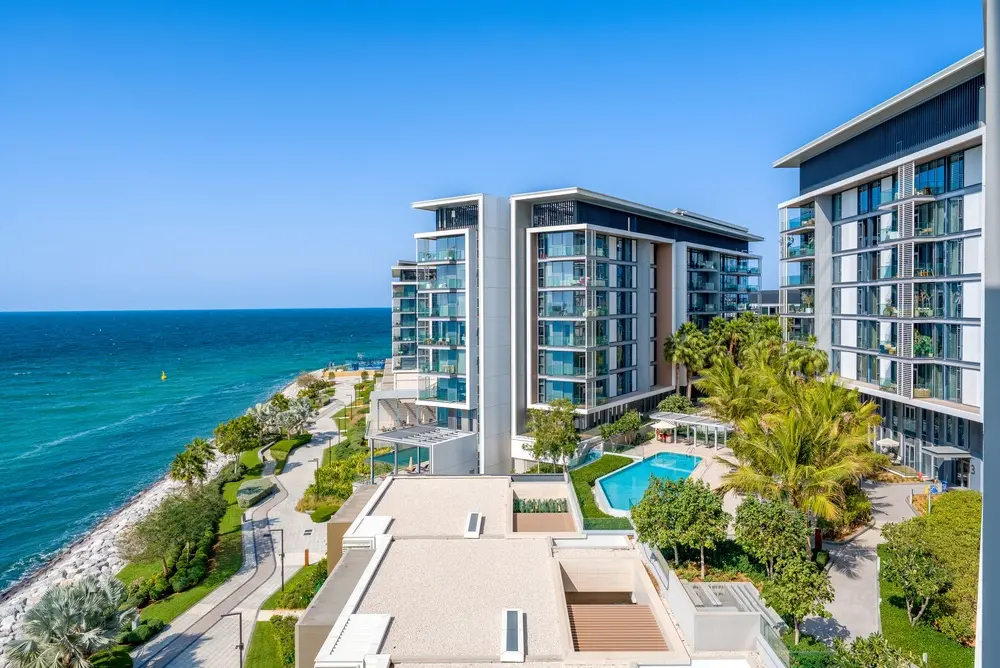
The most revealing figure in Dubai’s property market is not the price of its latest record-breaking villa. It is how buyers are paying. Dubai recorded AED 92.9 billion in property sales in the third quarter of 2026, with just over 67% of resale transactions completed in cash, according to Q3 market analysis published by Garant Consulting, drawing on Dubai Land Department data.
For buyers considering finance, that raises a practical question: how can you preserve liquidity while giving a seller confidence that the purchase will complete? Paying cash can simplify a transaction, but it also concentrates capital in an asset that may take time to sell. Borrowing can preserve financial flexibility, provided the funding is arranged around a realistic valuation and completion timetable.
The useful assessment connects local price trends and market risks with your intended holding period, available liquidity and funding certainty. Transaction activity alone cannot establish whether a particular property is fairly priced.
How Is the Dubai Property Market Performing in 2026?
Dubai recorded 37,429 property sales worth AED 92.9 billion in the third quarter of 2026. Developer sales accounted for around 68% of transactions, while resales represented a smaller share of deals but a higher average transaction value, according to Q3 market analysis.
| Q3 2026 Measure | Developer Sales | Resales |
|---|---|---|
| Transactions | 25,441 | 11,988 |
| Total sales value | AED 52.6bn | AED 40.3bn |
| Average transaction value* | AED 2.07m | AED 3.36m |
*Calculated from the reported totals. These averages reflect the mix of properties sold, rather than changes in the price of comparable homes.
Get in the Know
Subscribe to our newsletter
Buyers face different funding commitments across these segments. A developer purchase may spread payments across construction milestones, whereas a completed resale generally requires the purchase funds at transfer.
For a buyer, the useful comparison is therefore between properties with similar locations, specifications and completion status. Quarter-wide totals provide context, but they cannot establish whether an individual villa or apartment represents good value.
Map the payment timetable against available cash and proposed borrowing. If the purchase depends on refinancing at handover, assess how a lower valuation or delayed completion would affect the funding requirement.
Are Property Prices Coming Down in Dubai?
Dubai’s residential values fell earlier in 2026, but the latest valuation evidence points to a slowing correction. ValuStrat’s residential market research reported a marginal 0.1% month-on-month valuation change in September, following larger declines earlier in the year. In September, 80% of tracked villas and 77% of apartments recorded no valuation change.
Stable valuations do not necessarily mean buyers and sellers agree on price. ValuStrat has described a standoff in which buyers resist elevated asking prices while sellers remain reluctant to negotiate, extending transaction timelines. A period of relatively stable valuations should not be treated as proof that prices have reached a floor.
For buyers, comparable completed transactions are more useful than an advertised discount. A reduction from an ambitious asking price may still leave a property above the prices achieved for similar homes. Compare the same building or community, adjusting for size, condition, views and occupancy.
An agreed purchase price does not guarantee an equivalent lender valuation. If borrowing is calculated against a lower valuation, the buyer may need additional equity. Establish how much cash remains available to absorb that gap.
What Does a Cash-Heavy Market Mean for Buyers Using Finance?
A buyer using finance can compete with cash buyers, but the funding timetable needs to support the offer. With just over 67% of Dubai resale transactions reported as cash purchases in Q3 2026, sellers may place particular importance on the conditions attached to an offer and the likelihood of completion.
Cash purchases can still face delays over ownership arrangements, legal checks or the source of funds. An initial mortgage indication also leaves questions unresolved until the lender assesses the property, verifies documents and issues final approval.
The practical advantage comes from identifying those dependencies before agreeing a completion date. Establish what the lender has approved, what remains conditional and how long the outstanding steps could take. Any gap between the purchase timetable and the availability of funds needs a credible solution.
For wealthy buyers, borrowing may also serve a purpose beyond making the purchase affordable. It can preserve cash for business commitments or other liabilities. However, retained liquidity comes with interest costs, repayment obligations and potentially currency exposure where income, assets and debt are denominated differently.
Assess how much accessible capital remains after completion, and what obligations sit against it. The funding decision should account for both the transaction and the buyer’s financial position afterwards.
Is It Worth Buying Property in Dubai Now?
Buying property in Dubai may make sense where the price, intended use and funding fit the buyer’s circumstances. A stabilising market alone is insufficient reason to proceed.
The more useful test is whether the purchase remains manageable if the expected recovery takes longer. A buyer acquiring a home for several years faces a different decision from someone relying on a quick resale or refinancing at handover.
Before committing, assess three things:
- Total ownership cost: Include acquisition fees, service charges, maintenance and borrowing costs. For a rental property, allow for vacancy and management expenses.
- Capacity to hold: Establish whether you can meet payments and other commitments if rent is lower than expected or selling takes longer.
- Funding dependencies: Identify whether completion or repayment relies on selling another asset, securing a future mortgage or achieving a particular valuation.
Consider an illustrative off-plan purchase where the buyer expects a mortgage at completion to cover the final instalment. If the lender’s valuation is lower than anticipated, additional cash may be required precisely when the payment falls due. An attractive purchase price does little to resolve that funding gap.
A more resilient buying decision is one that remains workable without immediate price growth. Future appreciation may improve the outcome, but it should not be essential to completing the purchase or meeting its obligations.
What Is the Outlook for Dubai’s Property Market?
In its September assessment, published on 8 October, ValuStrat suggested that resistance between buyers and sellers could persist for another six to 12 months. This is an attributed outlook, not a guarantee of future market performance.
For buyers, a prolonged standoff could matter as much as further price falls. A property may retain its estimated value while taking longer to sell, leaving capital tied up beyond the owner’s intended timetable.
Three indicators deserve attention: completed sale prices for comparable properties, the time those properties take to sell, and competing supply approaching handover in the same location. Together, these offer a more useful picture of potential resale conditions than a citywide forecast alone.
The financing implication is to test the timetable as well as the price. If repayment depends on a disposal, consider what happens if the sale takes longer. If it depends on refinancing, assess the effect of a lower valuation or reduced borrowing capacity.
A purchase structure should leave room for slower sales and changing finance terms, rather than relying on the market recovering to a particular level by a particular date.
How Can You Finance a Dubai Property Purchase?
Depending on eligibility and lender appetite, a Dubai purchase may be funded through a mortgage secured on the property, borrowing against assets elsewhere, or a combination of borrowing and cash. The appropriate route depends on where the buyer’s wealth sits, how repayments will be met and when the purchase funds are required.
Each route places risk against a different asset. A Dubai mortgage makes the property’s acceptability and valuation central to the application. Borrowing against UK property creates a separate secured commitment, while lending against an investment portfolio may introduce collateral requirements if its value falls. Cross-border arrangements also require attention to currency exposure.
For off-plan purchases, distinguish the developer’s payment schedule from any future mortgage. Instalments spread purchase payments, but they do not guarantee that a lender will finance the balance at handover.
Before selecting a route, map each payment date to a confirmed source of funds. Compare total costs, repayment obligations and the assets exposed if circumstances change.
Important: Your home or property may be repossessed if you do not keep up repayments on a mortgage or any other debt secured on it. Where your income or assets are in a different currency from your borrowing, exchange rate movements could increase the cost of your repayments. Mortgages secured on property in Dubai are not regulated by the Financial Conduct Authority.
Important Information
This article is for general information only and does not constitute financial, investment, legal or tax advice. Market data is drawn from third-party sources, is correct at the time of writing and may change. Past market performance is not a reliable indicator of future results.
Mortgages and other lending secured on property outside the UK, including in Dubai, are not regulated by the Financial Conduct Authority (FCA). The protections of the UK regulatory system, including access to the Financial Ombudsman Service and the Financial Services Compensation Scheme, will not apply to them.
Your home or property may be repossessed if you do not keep up repayments on a mortgage or any other debt secured on it.
Exchange rate movements may increase the cost of repayments where your borrowing is in a different currency from your income or assets. If you borrow against an investment portfolio, a fall in its value may require you to provide additional security or repay part of the loan.
Enness does not provide investment, tax or legal advice. You should take independent tax and legal advice before buying property overseas.
Frequently asked questions
Can Non-Residents Get a Mortgage in Dubai?
Some lenders consider non-resident applicants, subject to their eligibility requirements. Nationality, income, existing commitments and the property can affect the assessment. Confirm eligibility and the required deposit before committing to a purchase.
Can I Borrow Against UK Assets to Buy Property in Dubai?
Potentially, subject to lender approval and any restrictions on the use of funds. Borrowing against UK property or other assets creates obligations secured against those assets, even if the Dubai purchase is completed without a local mortgage. Assess repayment capacity and currency exposure across the whole arrangement. Your home or property may be repossessed if you do not keep up repayments on a mortgage or any other debt secured on it.
Can I Rely on a Mortgage When an Off-Plan Property Completes?
A future mortgage should not be treated as guaranteed funding. Approval will depend on the lender’s requirements, your circumstances and the property’s valuation at that time. Establish how you would meet the final instalment if borrowing falls short or approval is delayed.
Does a High Proportion of Cash Buyers Make Dubai Property Less Risky?
Cash purchasing removes the need for mortgage approval on that transaction, but it does not remove valuation, resale or market risk. The reported cash share also does not establish whether buyers borrowed against assets elsewhere. Assess the property and your funding position separately.
The views and opinions expressed in this piece are those of the author and do not constitute advice or a recommendation, do not necessarily reflect the official policy or position of Enness, and are not intended to indicate any market or industry viewpoints, or those of other industry professionals.
Related Blog Posts
View All Read MORE
14th Oct 26 - 7 MIN READ