
Refinancing a high-value property overseas can become particularly complex when the borrower has multiple income streams and a significant proportion of their wealth is held through trusts or other structures. I recently assisted a successful Portuguese entrepreneur who was looking to refinance a luxury villa in St Tropez.
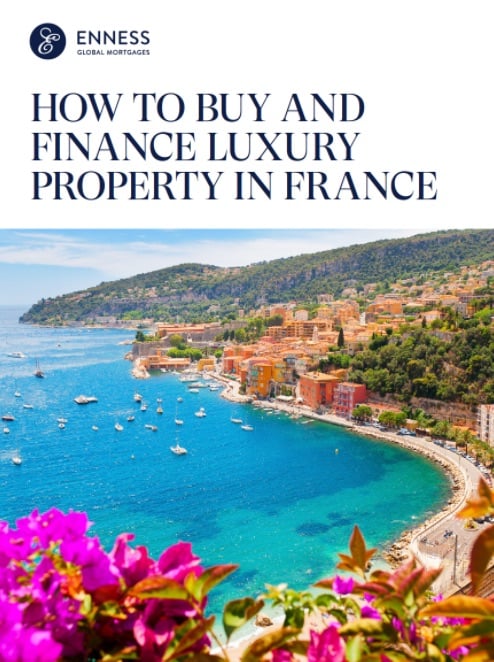
The property was valued at approximately €18 million and was located in an exclusive area close to the beach, with panoramic views across the Mediterranean. The client wanted to raise a total of €6.7 million against the property.
Of this, €5.2 million was intended to provide capital for redevelopment works, while a further €1.5 million was to be used to build a securities portfolio. The proposed borrowing therefore required a lender that was comfortable considering both the high-value property and the client’s wider financial position.
The client’s income was generated through several companies, making it more complex than a straightforward employment or single-business income profile. The lender required supporting evidence from an accountant to verify the different income streams.
There was an additional consideration around assets under management (AUM). The assets that formed part of the proposed banking relationship were held in a trust, meaning access to them required agreement from the trustees. This could have created delays and complications when arranging the finance.
I therefore focused on lenders that were prepared to take a broader view of the client’s circumstances and had experience dealing with complex international wealth structures.
Using Enness’ established lender relationships, I identified a lender that was comfortable accepting an accountant’s letter confirming the client’s income over the previous three years. This provided the lender with the evidence it needed without requiring the client to restructure his wider financial affairs.
Our relationship with the lender also enabled me to negotiate a significantly lower AUM requirement than the client had initially anticipated. The lender was comfortable with the client placing €1 million of assets under management against the €6.7 million facility.
The resulting mortgage was structured on a five-year fixed, interest-only basis. The rate secured at the time was 1.60%, while the reduced AUM requirement gave the client greater flexibility over his wider assets.
The case demonstrates the value of specialist international mortgage expertise when refinancing high-value European property. It also highlights how a lender’s willingness to consider complex income and wealth structures can make a significant difference to the overall financing solution.
For clients looking to raise substantial capital against overseas property, a large mortgage can provide a route to accessing property equity while retaining ownership of the underlying asset, subject to lender criteria and the proposed use of funds.
Read the UK version of this case study.
Information contained in our case studies is for market and illustrative purposes only. In some cases, these may be made up of multiple cases and are for illustrative purposes only.
Some case studies are made up of enquiries that have come into the business, not all business completes, and the posting of a case study does not represent a completed piece of business.
Property values can fall as well as rise, and you may not get back the amount originally invested. Property investments can be illiquid and may take time to sell. Where borrowing is used, your property may be repossessed if you do not keep up repayments on a mortgage or other loan secured against it.