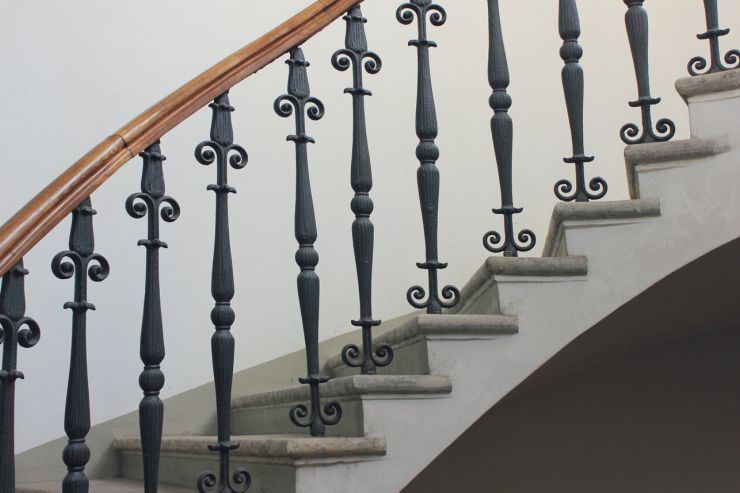
We have seen an increasing number of clients looking to purchase a flat located directly above or below a property they already own, with the intention of combining the two into one larger residence. Typically, the works involve installing a staircase between the properties and carrying out cosmetic improvements rather than extensive structural redevelopment.
While this may appear relatively straightforward, many high street lenders are unwilling to finance the transaction because, at the point of purchase or remortgage, they are technically still lending against two separate flats. This can make a conventional residential mortgage unsuitable.
However, where the proposed works are relatively limited, it may be possible to avoid the higher costs associated with development finance. Specialist private banks and building societies may be willing to cross-collateralise the two properties and allow the client to combine the flats into a single residence following completion, subject to their individual lending criteria.
In some cases, where the client has a relatively low mortgage on their existing flat, it may also be possible to raise sufficient additional borrowing against that property to cover both the deposit required for the second flat and the cost of the proposed works. This can potentially reduce the amount of additional cash the client needs to contribute, subject to affordability and lender criteria.
For transactions below £1M, building societies can sometimes be well suited to this type of structure, while private banks may offer more flexibility where the overall lending requirement exceeds £1M.
We recently dealt with two transactions that demonstrate how these structures can work in practice.
Building Society
Nature: Residential remortgage and purchase
Total property value: £950k across both flats
Maximum LTV: 75%
Product: Two-year discounted variable
Interest rate: 1.99%
Early repayment charge: 3% for two years, none thereafter
Mortgage term: Up to age 70
Repayment method: Part-and-part, with 50% of the property value on an interest-only basis and 25% on a capital-and-interest basis
Overpayments: Up to 10% of the outstanding balance each year without penalty
Lender application fee: None
Lender arrangement fee: £499
Private Bank
Nature: Residential purchase and remortgage
Property value: £3M
Maximum LTV: 65%
Mortgage term: Up to 25 years
Repayment method: Interest-only
Lender arrangement fee: 1% of the loan amount
The private bank offered a range of fixed-rate options, allowing the client to choose a structure that best suited their circumstances:
Two-year fixed
- Interest rate: 2.19% plus BoE base rate
- Monthly payment: £4,062
- Early repayment charge: 0.5% for two years, none thereafter
Two-year fixed
- Interest rate: 2.39%
- Monthly payment: £4,239
- Early repayment charge: 2% in year one and 1% in year two, none thereafter
Three-year fixed
- Interest rate: 2.59%
- Monthly payment: £4,594
- Early repayment charge: 3% in year one, reducing to 1% in year three, none thereafter
Four-year fixed
- Interest rate: 2.69%
- Monthly payment: £4,771
- Early repayment charge: 4% in year one, reducing to 1% in year four, none thereafter
Five-year fixed
- Interest rate: 2.79%
- Monthly payment: £4,949
- Early repayment charge: 5% in year one, reducing to 1% in year five, none thereafter
Overpayments: A capital reduction of 10% per annum could be made without an early repayment charge during the early repayment charge period.
These examples demonstrate why lender selection can be particularly important when a client is looking to purchase two adjoining or vertically connected flats and ultimately combine them into one residence. The transaction does not always fit neatly within conventional residential lending criteria, particularly where the legal status of the properties remains separate at the point of lending.
For clients considering this type of project, the proposed works, ownership structure, existing borrowing, property values, affordability and intended end position will all need to be considered. A lender must also be comfortable with the proposed security and the process for combining the properties.
Enness works with private banks, building societies and specialist lenders across the high-value mortgage market. Our role is to identify lenders whose criteria are appropriate for the specific structure rather than trying to force a complex transaction into a standard mortgage product.
Read the UK version of this case study.
Information contained in our case studies is for market and illustrative purposes only. In some cases, these may be made up of multiple cases and are for illustrative purposes only.
Some case studies are made up of enquiries that have come into the business, not all business completes, and the posting of a case study does not represent a completed piece of business.
Property values can fall as well as rise, and you may not get back the amount originally invested. Property investments can be illiquid and may take time to sell. Where borrowing is used, your property may be repossessed if you do not keep up repayments on a mortgage or other loan secured against it.