
- Client: High-net-worth individual
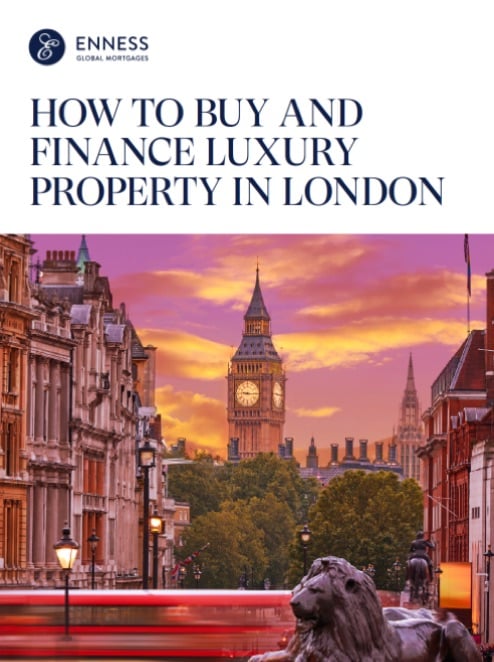
- Property: Prime residential property, London
- Property value: £4.25M
- Loan amount: £3.19M
- LTV: 75%
Enness was approached by a high-net-worth client looking to purchase a prime residential property in London. While the client had substantial liquid assets following a significant capital event, their income did not fit the conventional salary-based model used by many traditional mortgage lenders.
The client wanted to retain a greater proportion of their capital rather than commit a larger amount to the property purchase. This meant the mortgage needed to provide a meaningful level of leverage while taking the client’s wider financial position into account.
Rather than assessing the application solely on conventional employment income, Enness explored private banking solutions where the client’s overall balance sheet, liquid assets and investment holdings could be considered alongside their income.
We identified a private bank that was comfortable taking a holistic view of the client’s financial position. This allowed us to structure a mortgage of £3.19M against the £4.25M property, representing 75% LTV, while taking the client’s wider asset position into consideration as part of the affordability assessment.
The resulting structure gave the client the leverage they required while allowing them to retain liquidity for their wider investment plans. The case demonstrates the value of a bespoke approach where a borrower’s financial strength is not necessarily reflected through conventional employment income alone.
For high-net-worth borrowers with substantial assets but complex or non-standard income, private banking can provide greater flexibility than a traditional mortgage application. Enness works with private banks and specialist lenders to structure complex mortgages around the individual circumstances of each client.
Where appropriate, this can include consideration of investment portfolios, liquid assets and other sources of wealth alongside conventional income, subject to lender criteria and affordability requirements.
Read the UK version of this case study.
Information contained in our case studies is for market and illustrative purposes only. In some cases, these may be made up of multiple cases and are for illustrative purposes only.
Some case studies are made up of enquiries that have come into the business, not all business completes, and the posting of a case study does not represent a completed piece of business.
Property values can fall as well as rise, and you may not get back the amount originally invested. Property investments can be illiquid and may take time to sell. Where borrowing is used, your property may be repossessed if you do not keep up repayments on a mortgage or other loan secured against it.