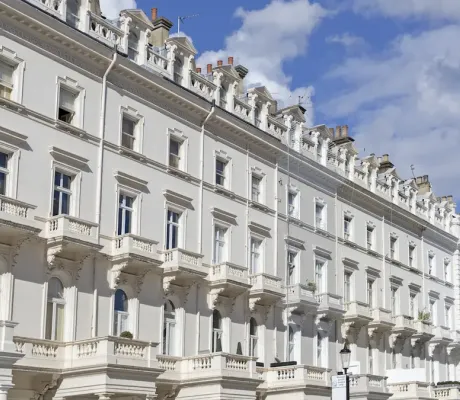
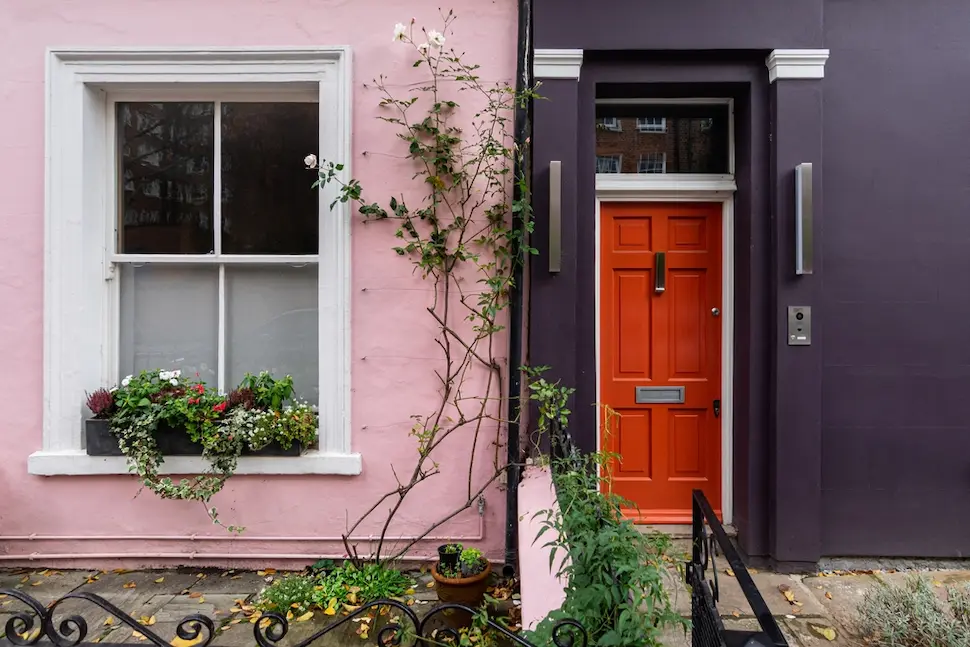
Pastel terraces have become synonymous with Notting Hill, but behind the aesthetic appeal lies one of London’s most competitive and tightly held property markets. Buying property in Notting Hill remains one of the most sought-after opportunities in prime London, supported by strong demand, limited supply, and a diverse mix of domestic and international buyers. For those looking to buy property in Notting Hill, understanding pricing, market dynamics, and how purchases are financed is essential to securing the right property in a highly competitive environment. The market has seen a 14.5% year-on-year increase in high-value homes coming to market, one of the strongest rises across prime areas.
Why Buy Property in Notting Hill?
Notting Hill is widely recognised for its distinctive character, combining historic charm with a vibrant cultural identity. The area is best known for its colourful Victorian terraces, the internationally renowned Notting Hill Carnival, and the Portobello Road Market, one of the largest antiques markets in the world.
Its global profile was further elevated by the 1999 film Notting Hill, which brought international attention to the neighbourhood’s unique streets and architecture. Beyond this, Notting Hill has long been recognised as one of West London’s most culturally diverse and creative districts.
Today, it is considered one of London’s most desirable residential areas, blending its historic, multicultural roots with a more refined mix of high-end boutiques, restaurants, and prime residential property.
Demand remains consistently strong, driven by both domestic purchasers and international buyers seeking a foothold in London’s prime property market. This global appeal supports pricing resilience and sustained competition, particularly for the most attractive homes available on the market right now.
Get in the Know
Subscribe to our newsletter
Positioned just below ultra-prime areas such as Mayfair, Notting Hill offers a balance of lifestyle and relative value. For many buyers, it represents an opportunity to secure prime London property with broader entry points, while still benefiting from strong long-term demand and liquidity.
Property Prices and Market Dynamics
Notting Hill offers relative value within the prime market. While still firmly positioned in London’s upper tiers, pricing is more varied, typically ranging between £1,300 and £2,600 per sq. ft depending on location, specification, and property type. This creates a broader entry point for buyers, particularly when compared to Mayfair’s more compressed ultra-prime bracket.
What Drives Price Differences?
Street and Micro-Location
- Prime roads such as those near Ladbroke Square or Stanley Crescent command higher values
- Quiet, tree-lined streets typically outperform busier locations
Garden Access
- Properties with access to private communal garden squares often achieve a significant premium
- These can outperform homes with standard outdoor space due to exclusivity and lifestyle appeal
Property Type
- White stucco townhouses and large lateral apartments attract the highest values
- Smaller flats and converted units offer lower entry points into the market
- Newly refurbished or turnkey properties command a premium over unmodernised homes
Micro-location and lifestyle feature also play a more visible role in pricing. Access to one of Notting Hill’s communal garden squares, for example, can command a meaningful premium, often exceeding properties with standard outdoor space, reflecting the importance of lifestyle-led demand in the area.
This is further reflected in supply trends, with the number of homes listed above £2M rising by 14.5% year-on-year, one of the strongest increases across prime London. Demand remains globally diverse, with a significant proportion of international buyers, but with a higher share of owner-occupiers compared to more investment-driven prime markets.
In general, Notting Hill tends to see higher transaction volumes and a more fluid market dynamic, driven by both domestic and international buyers. Increased supply has not necessarily reduced competition, particularly for most desired properties, which continue to attract strong interest.
How to Buy Property in Notting Hill
Buying property in Notting Hill requires a clear strategy, particularly in a market defined by strong demand, limited supply, and a high proportion of well-prepared buyers. Understanding the process from the outset can significantly improve your chances of securing the right property.
1. Define Budget and Deposit
The first step is establishing a clear budget, including how much deposit you are willing and able to commit. For most buyers looking to buy property in Notting Hill, deposits typically start from 15-25%, although higher-value properties or more complex financial profiles may require 25-40% or more.
It is also important to consider additional costs such as stamp duty, legal fees, and potential refurbishment, particularly given the number of period properties in the area.
2. Secure Financing Early
In a competitive market, having financing in place before beginning your search is essential. Buyers relying on a mortgage should ensure they have an agreement in principle, while high-value purchases may benefit from more tailored structures through private banks or specialist lenders.
Being “finance-ready” not only improves confidence when making an offer but can also position you more favourably against competing buyers, particularly in fast-moving segments of the Notting Hill property market.
3. Work with Local Agents
Access to the best properties in Notting Hill often depends on relationships with well-connected local agents. A significant proportion of high-value homes are sold off-market, meaning they are never publicly listed.
Working closely with agents who specialise in the area can provide early access to these opportunities, as well as valuable insight into pricing, demand, and micro-location differences.
4. Make a Competitive Offer
Once the right property is identified, acting decisively is key. Demand for well-located, high-quality homes in Notting Hill remains strong, and desirable properties can attract multiple interested buyers.
Submitting a well-structured offer, supported by clear proof of funds or pre-arranged financing, can significantly improve your chances of success. In many cases, certainty and speed are just as important as price when securing property in prime London.
Financing Property in Notting Hill
Financing property in Notting Hill, particularly at higher values, often requires a more tailored approach than standard residential lending. While traditional mortgages may suit straightforward income profiles, many purchases in prime London involve more complex financial structures.
Specialist Mortgage Structuring
For larger transactions, lenders increasingly assess the full financial position of the borrower rather than relying solely on income multiples. This can include assets, liquidity, and overall balance sheet strength, allowing for more flexible borrowing structures aligned to long-term wealth planning. The recommended structure will be a specialist mortgage.
Private Banks and Specialist Lenders
Private banks play a significant role in financing property in Notting Hill, particularly for high-net-worth and international buyers. These lenders can offer bespoke underwriting, taking into account multi-jurisdictional income, asset holdings, and more complex financial arrangements that may fall outside traditional criteria.
Interest-Only and Flexible Structures
Interest-only mortgages are commonly used in prime London, enabling buyers to optimise cash flow while maintaining flexibility. Rather than repaying capital during the term, borrowers can align repayment with future liquidity events, such as asset sales or refinancing.
Complex Income and International Buyers
Many buyers in Notting Hill have income derived from multiple sources, including bonuses, dividends, or overseas earnings. In these cases, structuring a mortgage requires lenders who can assess income holistically, rather than applying rigid criteria.
For international purchasers or those with non-linear income, specialist structuring ensures that borrowing reflects the true financial position of the buyer, improving both access to finance and overall efficiency of the transaction.
The most effective financing strategies combine flexibility with early preparation. Aligning the right structure from the outset can be a decisive advantage when looking to buy property in Notting Hill, particularly in competitive segments of the market.
Risks to Consider When Buying in Notting Hill
While Notting Hill remains one of the most desirable areas in prime London, buyers should be aware of several factors that can influence both short-term outcomes and long-term value.
- Pricing Volatility: Although prime London property is generally more stable than the wider market, pricing in Notting Hill can still fluctuate, particularly in response to interest rate movements, global demand, and shifts in buyer sentiment. Micro-markets within the area can also behave differently, with some streets outperforming others.
- High Competition: Demand for well-located, high-quality properties remains strong, especially for homes with garden access or turnkey finishes. This can lead to competitive bidding environments, where buyers may need to act quickly and position themselves strongly to secure the right property.
- Liquidity Considerations: While Notting Hill is a relatively liquid market compared to more niche locations, selling timelines can still vary depending on price point and property type. Higher-value homes or more unique properties may take longer to transact, particularly in slower market conditions.
- Risk of Overpaying: In highly sought-after pockets of Notting Hill, there is a risk of overpaying, particularly when competition is strong or where buyers place a premium on specific features such as garden squares or prime streets. Careful analysis of comparable sales and local market conditions is essential to avoid paying above the underlying value.
Taking these factors into account allows buyers to approach the market with greater clarity, ensuring that decisions are aligned not only with lifestyle goals but also with long-term financial considerations.
FAQs: Buying Property in Notting Hill
Is Notting Hill a good place to buy property?
Yes, Notting Hill is considered one of the most desirable areas in prime London, offering strong demand, international appeal, and a balance of lifestyle and long-term value.
How much does property cost in Notting Hill?
Property in Notting Hill typically ranges from £1,300 to £2,600 per square foot, with higher prices for prime streets, garden square access, and fully refurbished homes.
Can you get a mortgage for a property in Notting Hill?
Yes, it is possible to get a mortgage to buy property in Notting Hill, although higher-value purchases may require larger deposits and more tailored financing structures.
Is Notting Hill a good investment?
Yes, Notting Hill is widely regarded as a strong long-term investment, supported by limited supply, consistent demand, and its position within prime London.
How This Fits Within a Broader Property Finance Strategy
In higher-value transactions, buying property in Notting Hill is rarely a standalone decision. Financing is often structured alongside other elements of a broader wealth strategy, ensuring liquidity is preserved while maintaining flexibility across a wider asset base.
For larger purchases, this may involve large mortgage structures, where borrowing is aligned not just to income, but to overall wealth and long-term financial objectives. For international buyers, financing can be tailored to incorporate overseas income, multi-currency exposure, and cross-border assets, allowing for more efficient structuring.
In more complex scenarios, buyers may also utilise securities-backed lending (SBL) alongside a traditional mortgage, accessing liquidity from investment portfolios without requiring asset sales.
Taken together, these approaches allow buyers to structure property acquisitions in a way that supports both the purchase itself and their wider financial position, rather than treating the mortgage in isolation.
The views and opinions expressed in this piece are those of the author and do not constitute advice or a recommendation. They do not necessarily reflect the official policy or position of Enness and are not intended to indicate any market or industry viewpoints, or those of other industry professionals.
Financing options available to you will depend on your requirements and circumstances at the time.
Always seek advice from tax and legal professionals.

Islay Robinson, founder of Enness, is a specialist in high-value and complex mortgage transactions. He has played a key role in structuring and delivering bespoke financing solutions across a wide range of UK and international cases.