- Client: UK national and resident
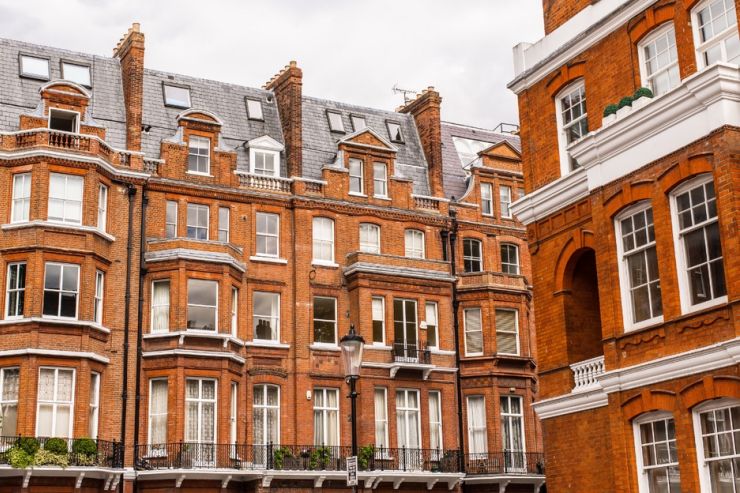
- Property: Central London property valued at £7M
- Mortgage amount: £5.25M
- LTV: 75%
- Mortgage type: Interest-only
- Interest rate: 2.64% fixed for five years
- AUM: None required
For high-net-worth borrowers, purchasing a larger property can provide the space and flexibility required as family and lifestyle needs evolve. However, arranging a high loan to value (LTV) mortgage on a high-value property can be challenging, particularly where the borrower is looking for an interest-only structure.
Enness was approached by an existing client looking to move to a new property in central London valued at approximately £7M. The client wanted to secure mortgage funding of £5.25M, representing a 75% LTV.
The client was a UK national and resident and wanted the mortgage to be arranged on an interest-only basis. This would provide lower monthly repayments than a capital-and-interest structure during the interest-only period, subject to an appropriate strategy for repaying the outstanding capital.
The required 75% LTV was one of the main challenges. High-value mortgages are often subject to more conservative LTV limits, particularly where the borrower is seeking interest-only finance. A lender therefore needed to be comfortable with both the property and the client’s wider financial circumstances.
Another consideration was the absence of an assets under management (AUM) requirement. Private banks can sometimes require borrowers to place assets with them as part of a high-value mortgage arrangement, particularly where higher LTV lending is involved. The client wanted to secure the required funding without transferring additional assets to the lender.
Enness approached its network of private and specialist lenders to identify a lender prepared to consider the combination of property value, 75% LTV and interest-only structure without requiring an AUM arrangement.
Following negotiations, Enness secured mortgage funding of £5.25M against the £7M central London property, representing 75% LTV. The mortgage was arranged on an interest-only basis at a rate of 2.64% fixed for five years at the time.
The resulting structure allowed the client to proceed with the purchase while retaining the benefits of a fixed interest rate for the initial five-year period and without being required to place additional assets under management.
The case demonstrates how a large mortgage can be structured for a high-net-worth borrower seeking a relatively high LTV on a high-value London property. Where conventional lenders may apply more restrictive criteria, private and specialist lenders can sometimes provide greater flexibility, subject to their individual lending criteria.
For borrowers looking to finance a high-value London property with an interest-only mortgage, specialist mortgage expertise can help identify lenders able to consider higher LTV requirements and bespoke repayment structures.
Read the UK version of this case study.
Information contained in our case studies is for market and illustrative purposes only. In some cases, these may be made up of multiple cases and are for illustrative purposes only.
Some case studies are made up of enquiries that have come into the business, not all business completes, and the posting of a case study does not represent a completed piece of business.
Property values can fall as well as rise, and you may not get back the amount originally invested. Property investments can be illiquid and may take time to sell. Where borrowing is used, your property may be repossessed if you do not keep up repayments on a mortgage or other loan secured against it.