
- Client: UK National and Resident
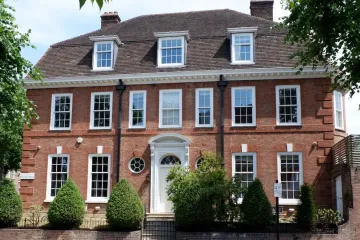
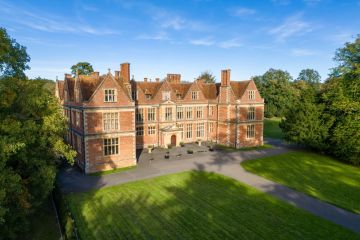
- Property: Detached house with annex and 10 acres of land across five titles, valued at £3m
- Loan: £1.8m
- LTV: 60%
- Product: Two-year fixed at 7.34%, with a 0.5% fee
In this case, we were approached by a client looking to purchase a new family home near Knutsford, Cheshire, with an asking price of £3 million. The client wanted to use income generated through their position as a director and 100% shareholder of a law practice to support the mortgage affordability assessment.
However, relying solely on the client’s declared income was not a viable option. The client deliberately took a relatively modest director’s salary and dividends from the business in order to manage their tax liabilities. Although the business was profitable, this meant that the income shown personally did not reflect the underlying strength of the company or the client’s wider financial position.
The property itself also created an additional lending challenge. Alongside the main detached house, there was an annex held on a separate title, as well as 10 acres of land divided across three further titles. As a result, the overall property comprised five separate titles. Many lenders would only consider the value of the main residential property when assessing the security, rather than taking the combined value of all five titles into account.
We therefore needed to identify a lender that could take a more flexible approach to both the client’s income and the property security. After reviewing the circumstances, we found a lender that was able to monetise the significant retained profits within the client’s company when assessing affordability. This allowed the client to borrow the full amount required without having to extract additional dividends from the business and incur a further personal tax liability.
The lender was also comfortable taking the combined value of all five property titles into consideration. The property’s location and strong resale potential provided additional comfort and supported the lender’s decision to accept the wider security package.
The resulting mortgage provided the client with £1.8 million of borrowing, representing 60% LTV, on a two-year fixed rate of 7.34% with a 0.5% arrangement fee. The structure allowed the client to purchase the property while making use of the strength of their business rather than relying solely on the relatively low level of personal income they chose to draw.
This case demonstrates how complex income and unusual property structures can create challenges with mainstream lenders, even where the underlying borrower and security are strong. A specialist lender may be able to take a more holistic view of retained company profits, property titles and the overall circumstances when assessing a high-value mortgage.
Enness specialises in structuring complex mortgages for business owners and borrowers with unusual income structures. To discuss your circumstances, speak to a mortgage specialist.
Read the UK version of this case study.
Information contained in our case studies is for market and illustrative purposes only. In some cases, these may be made up of multiple cases and are for illustrative purposes only.
Some case studies are made up of enquiries that have come into the business, not all business completes, and the posting of a case study does not represent a completed piece of business.
Property values can fall as well as rise, and you may not get back the amount originally invested. Property investments can be illiquid and may take time to sell. Where borrowing is used, your property may be repossessed if you do not keep up repayments on a mortgage or other loan secured against it.