
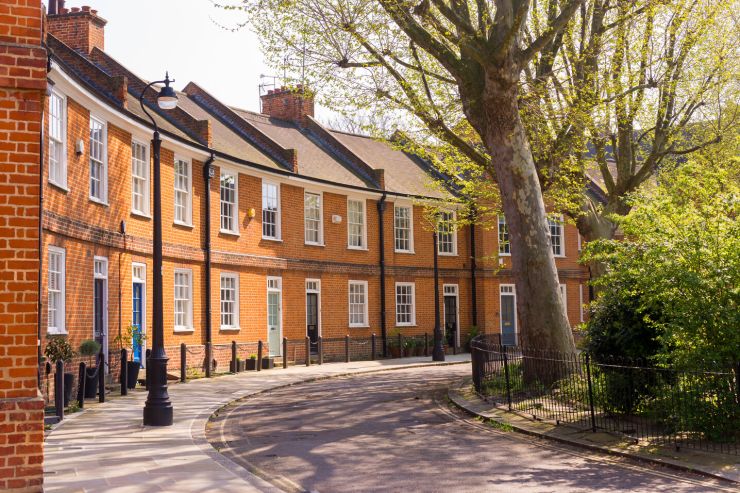
- Property: Six apartments in Kingston upon Thames
- Property value: £3.71M
- Loan amount: £2.597M
- LTV: 70%
- Loan term: 12 months
- Rate: 0.89% per month
- Fee: 2%
Development exit finance can provide property developers with additional time to sell completed units and repay their existing development borrowing. Enness was approached by an active property developer seeking a development exit facility against a completed scheme in Kingston upon Thames.
The development comprised six apartments with a combined value of approximately £3.71M. Two of the apartments had already been sold, while the remaining units were being marketed. Rather than requiring the developer to sell the remaining properties immediately to repay the existing development finance, the objective was to secure a short-term facility that would provide additional time to complete the sales process.
Development exit finance can be particularly useful once a project has reached completion but the remaining units have not yet all been sold. The ability to refinance the outstanding development debt can give developers greater flexibility over the timing of sales and potentially avoid the pressure of selling completed units within a restricted timeframe.
Enness assessed the completed development, the remaining units and the proposed exit strategy before approaching suitable specialist lenders. The key consideration was finding a lender comfortable with the completed residential scheme and the anticipated sale of the remaining apartments.
Following negotiations, Enness secured a £2.597M development exit facility against the £3.71M property value. This represented a 70% loan to value (LTV).
The facility was arranged for a 12-month term at a rate of 0.89% per month, with a 2% fee. The additional term provided the developer with time to continue marketing the remaining apartments and work towards repaying the facility through property sales.
Following completion of the transaction, three of the remaining apartments had subsequently gone under offer, demonstrating progress towards the proposed sales-based exit strategy. The facility therefore provided the developer with additional time to progress the sales process rather than relying on an immediate disposal of all remaining units.
The case demonstrates how property development finance can extend beyond the initial construction phase. A development exit facility can be considered where a completed project still has units to sell and the developer requires additional time to repay existing finance.
For developers considering bridging finance after completing a residential development, the appropriate structure will depend on the completed property, outstanding debt, sales position, proposed exit strategy and lender criteria.
Read the UK version of this case study.
Information contained in our case studies is for market and illustrative purposes only. In some cases, these may be made up of multiple cases and are for illustrative purposes only.
Some case studies are made up of enquiries that have come into the business, not all business completes, and the posting of a case study does not represent a completed piece of business.
Property values can fall as well as rise, and you may not get back the amount originally invested. Property investments can be illiquid and may take time to sell. Where borrowing is used, your property may be repossessed if you do not keep up repayments on a mortgage or other loan secured against it.