

- Client: Offshore company with ultimate beneficial owners based across two continents
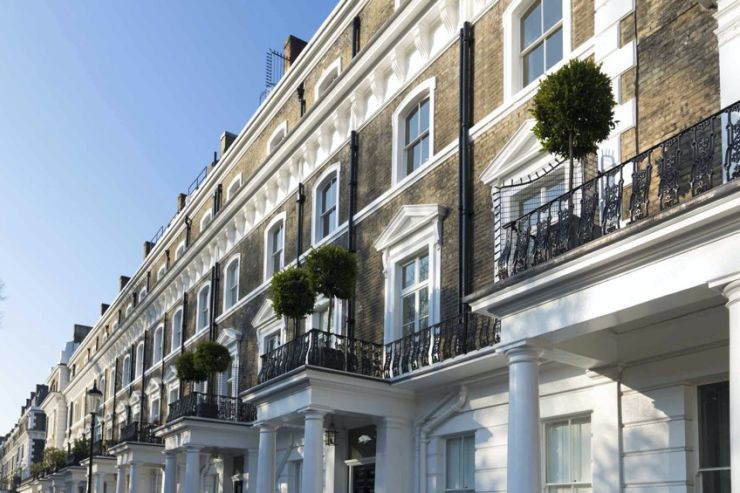
- Property: London property valued at approximately £10 million
- Challenge: Required funding at short notice to cover legal and litigation costs, with a complex offshore ownership structure
- Finance: 12-month bridging loan at 0.99% per calendar month, secured against the London property
Refinancing a high-value property can become more challenging where the funds are required to meet legal and litigation costs. Lenders may take a closer look at the wider circumstances of the borrower, particularly where there is an offshore ownership structure and the ultimate beneficial owners are based overseas.
Enness was approached by the owners of an offshore company that held a London property valued at approximately £10 million. The ultimate beneficial owners were based across two different continents and required additional capital at relatively short notice to cover ongoing litigation fees.
The property had an existing mortgage, but the relatively low level of borrowing against the asset provided sufficient equity to consider a further fundraising. The objective was to refinance the existing mortgage while releasing additional capital to meet the anticipated legal expenses.
The ownership structure created one of the main challenges. The legal owner was an overseas company, while the ultimate beneficial owners were located in different jurisdictions. This meant that the lender would need to undertake appropriate due diligence across the relevant entities and individuals.
The purpose of the fundraising also required careful consideration. While property finance is commonly used for acquisitions, refinancing or business purposes, raising funds to cover litigation costs can lead some lenders to take a more cautious approach, particularly where there is uncertainty around the potential duration or financial impact of the legal proceedings.
Given the client’s requirement for funding at short notice, a conventional long-term mortgage was unlikely to provide the necessary speed. Enness therefore considered short-term finance as an alternative solution, with the intention of refinancing the facility onto longer-term mortgage finance once the immediate requirement had been addressed.
Enness approached a private banking lender with experience of complex international transactions. The application was presented around the underlying value of the London property, the available equity and the overall structure of the transaction.
The lender agreed to provide a bridging loan for a 12-month term, with the funds raised secured against the London property. The facility was arranged at an interest rate of 0.99% per calendar month at the time.
The short-term structure provided the client with access to the capital required to meet the litigation costs while allowing additional time to consider the longer-term refinancing of the property. The proposed exit was to refinance or convert the bridging facility into a more traditional mortgage arrangement after the initial 12-month term.
The case demonstrates how specialist property finance can provide an alternative where a conventional mortgage may not be appropriate because of the borrower’s circumstances, ownership structure or intended use of funds. The availability of substantial property equity can also provide lenders with additional security when considering more complex situations.
For clients requiring capital against high-value UK property in unusual circumstances, specialist lenders may be able to consider the wider financial position and underlying security. Any facility remains subject to lender criteria, valuation, due diligence and an appropriate exit strategy.
Read the UK version of this case study.
Information contained in our case studies is for market and illustrative purposes only. In some cases, these may be made up of multiple cases and are for illustrative purposes only.
Some case studies are made up of enquiries that have come into the business, not all business completes, and the posting of a case study does not represent a completed piece of business.
Property values can fall as well as rise, and you may not get back the amount originally invested. Property investments can be illiquid and may take time to sell. Where borrowing is used, your property may be repossessed if you do not keep up repayments on a mortgage or other loan secured against it.