- Client: International high-net-worth clients with multi-jurisdictional income
- Challenge: Urgent capital release against a refurbished UK property with outstanding completion documentation
- Loan Amount: Circa £2M second charge bridging loan
An international high-net-worth client approached Enness requiring urgent access to circa £2M of liquidity secured against a UK residential property. The requirement was highly time-sensitive, driven by an external investment opportunity with a strict completion deadline.
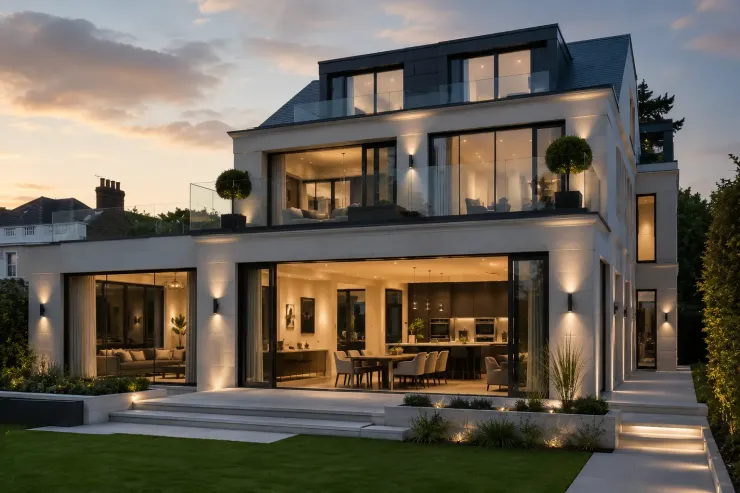
The property itself introduced immediate complexity. It had recently undergone a substantial refurbishment and, although nearing completion, certain final works and associated documentation remained outstanding. This meant standard completion documentation and sign-off had not yet been fully finalised, creating a challenge for many conventional lenders.
The client’s profile added a further layer of complexity. The borrowers had an international financial footprint, with tax residency, business interests, and income spread across multiple jurisdictions. Their income was derived from several international sources, creating a non-standard profile that many lenders would find difficult to assess using traditional underwriting models.
In addition to the financing challenge, the transaction required coordination across multiple jurisdictions within a compressed timeframe. Identity verification, supporting documentation, lender approvals, and legal requirements all needed to be managed simultaneously to avoid delays.
Enness immediately approached the case with a parallel execution strategy. Rather than tackling each issue sequentially, multiple workstreams were managed at the same time to maximise speed and reduce execution risk. This included lender selection, legal coordination, property documentation, and verification of international income and identity requirements.
A specialist bridging lender with experience in complex, time-sensitive transactions was identified. The lender was comfortable assessing both the strength of the underlying asset and the client’s broader financial profile. Enness also coordinated with the existing lender to secure consent for the second charge facility while ensuring all outstanding property and legal requirements were addressed.
A bespoke circa £2M second charge bridging loan was arranged against the property, providing the client with the required liquidity within an accelerated timeframe. From initial application to drawdown, funds were released within approximately 10 working days.
This case demonstrates how complex bridging transactions often involve multiple interconnected challenges rather than a single obstacle. Where timing is critical and complexity spans property, legal, and international financial structures, specialist lender relationships and execution expertise become essential. Through careful structuring and rapid coordination, Enness delivered a fast and effective funding solution.
Disclaimer
This case study is anonymised and provided for illustrative purposes only. It does not constitute financial, legal, tax, or investment advice. Enness acts as a broker and not as a lender. All lending is subject to status, underwriting, valuation, and lender approval. Loan terms, pricing, and maximum loan-to-value ratios vary depending on individual circumstances, asset profile, and market conditions. Outcomes are not indicative of future results. Independent professional advice should be sought before entering into any financial arrangement.
Bridging finance is expensive and is not suitable for everyone. You should seek professional advice to discuss your personal circumstances and needs to assess if this is a suitable option for you.
Enness does not give advice on Securities Backed Lending and lender introductions are unregulated.
Risk Warning: Your property may be repossessed if you do not keep up repayments on any debt secured against it.
Information contained in our case studies is for market and illustrative purposes only. In some cases, these may be made up of multiple cases and are for illustrative purposes only.
Some case studies are made up of enquiries that have come into the business, not all business completes, and the posting of a case study does not represent a completed piece of business.
Property values can fall as well as rise, and you may not get back the amount originally invested. Property investments can be illiquid and may take time to sell. Where borrowing is used, your property may be repossessed if you do not keep up repayments on a mortgage or other loan secured against it.