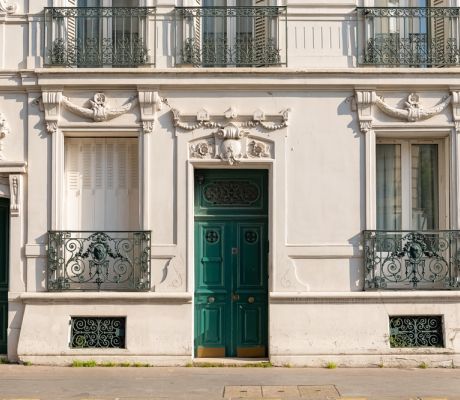
Switzerland holds a peculiar place in the global imagination. With a reputation built on its neutrality, solid institutions and some of the most breathtaking landscapes in Europe, the country manages to bring together world-class ski resorts in the Alps, picturesque cities right on the shores of Lake Geneva and Lake Lugano, and a globally renowned financial system, all of which operate under a unique and rather restrictive real estate market.
The process of buying property in Switzerland, however, is a lot more formal than in many other European countries. Foreigners are subject to strict rules about where, how and under what conditions they can buy property here. The main law that governs overseas buyers is the Lex Koller law, which basically limits non-Swiss residents from buying residential property in a lot of the country.
In practice, this means that international buyers typically must stick to 'holiday zones' - places like popular ski resorts and favourable spots around Lake Lugano or Montreux. And there's usually a limit on the size of property you can buy, usually capped at about 200 square meters of living space per person. On top of that, there are cantonal rules that limit the number of second homes you can have, and these rules are often referred to as Lex Weber. Moreover, each region has its own set of local rules and regulations, which can vary significantly.
If you're a foreign buyer, sorting out these laws, as well as the various financing options and affordability calculations, is a must before you even think about getting into the market in one of Europe's most exclusive and tightly regulated property markets.
Where Can Foreigners Buy Property in Switzerland?
Under the Lex Koller framework, foreign nationals are generally restricted to purchasing property within designated holiday zones. Most major cities, including Geneva and Zurich, remain largely closed to non-resident buyers.
Get in the Know
Subscribe to our newsletter
However, established Alpine resorts have historically provided access to overseas purchasers, subject to permit approval and size restrictions. Prime destinations such as St. Moritz, Gstaad, and Verbier continue to attract international high-net-worth buyers seeking secondary residences within tightly controlled markets.
Andermatt: A Notable Exception
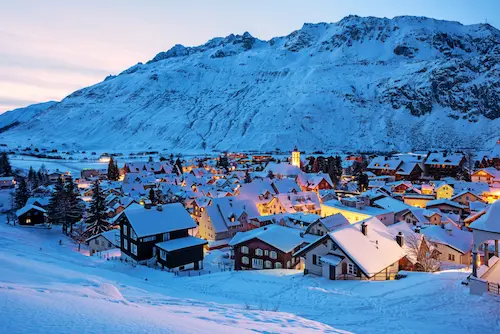
One of the most significant developments in recent years has been the evolution of Andermatt.
Through a government-backed exemption negotiated as part of a large-scale redevelopment initiative, Andermatt has been granted relief from certain Lex Koller residency requirements. This has allowed foreign buyers to acquire property more freely than in most other Swiss municipalities.
Originally a quiet Alpine village, Andermatt has undergone extensive transformation over the past two decades into a full-scale international resort. Investment in infrastructure, hospitality and ski operations, including acquisition by Vail Resorts, has significantly elevated its global profile.
The result is one of the only large-scale residential markets in Switzerland where overseas purchasers can buy without the usual secondary residence quota limitations.
Prices reflect this evolution. New-build apartments typically range from approximately CHF 1.3 million for smaller units to CHF 5 million and above for larger penthouses. Development is ongoing, though supply remains phased and controlled, with further projects expected over the coming decade.
For some international buyers, Andermatt represents both lifestyle appeal and early-stage positioning within an emerging luxury destination.
Other Accessible Locations
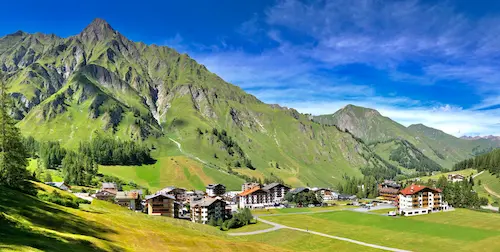
Beyond traditional Alpine enclaves, certain smaller municipalities, including Samnaun, are zoned to permit foreign ownership under specific local frameworks.
Lake-adjacent locations such as Montreux and parts of Lugano may also permit non-resident purchases, though quotas and cantonal interpretation vary.
Because foreign ownership rules are determined at the municipal and cantonal levels, availability can shift over time. Early legal verification is essential before committing to a transaction.
What This Means for International Buyers
While Switzerland remains protective of its housing market, pathways to ownership do exist, particularly within established resort zones and select redevelopment areas.
The critical factors are:
- Municipality eligibility
- Permit quota availability
- Property size compliance
- Intended usage classification
Understanding these variables at the outset significantly reduces transaction risk when buying property in Switzerland as a foreign national.
How Does Financing Work When Buying Property in Switzerland?
Financing plays a central role when buying property in Switzerland, particularly for non-residents, expats and internationally mobile high-net-worth individuals. The Swiss mortgage market operates very differently from the UK and other European jurisdictions, with conservative underwriting standards and strict affordability modelling.
Lending appetite varies significantly depending on whether you approach a local Swiss bank, a private bank or a specialist short-term lender.
Local Swiss Banks
Domestic Swiss banks are traditionally conservative in their lending approach.
In many cases, they will:
- Lend up to approximately 60-70% loan-to-value
- Require capital-and-interest repayment structures
- Offer fixed or variable rate options (fixed periods can extend up to 10 years)
- Assess affordability using a 30-40% debt-to-income ratio
- Stress test affordability at an assumed interest rate of around 5%, even if prevailing rates are lower
Importantly, Swiss banks consider all global liabilities, including mortgages, personal loans, credit facilities and, in some cases, school fees or rental commitments, when calculating affordability.
For applicants over the age of 60, lenders often assess long-term retirement income sustainability, even if the borrower intends to continue working.
Banks also place significant emphasis on the quality, liquidity and location of the property itself. It is common for full property documentation to be requested at an early stage of the underwriting process.
Private Banks
For high-net-worth and ultra-high-net-worth buyers, private banks can offer greater structural flexibility.
Facilities may:
- Be structured on an interest-only basis
- Be priced at SARON plus a margin
- Allow for higher leverage where global assets are pledged alongside the property
In certain circumstances, leverage can exceed standard domestic lending thresholds if supported by a broader wealth relationship. This is particularly relevant for internationally diversified clients with substantial liquid portfolios.
Private banks tend to assess the borrower’s global net worth and relationship potential, rather than relying solely on domestic income metrics.
Bridging & Short-Term Facilities
In time-sensitive transactions, such as off-market Alpine purchases, short-term bridging facilities may be appropriate.
These loans are typically:
- Lower leverage (often around 50-60%)
- Priced monthly
- Structured with rolled-up interest
They are generally used as transitional solutions before longer-term financing is put in place.
Timelines & Agreements in Principle
When buying property in Switzerland, securing an Agreement in Principle early in the process can strengthen a buyer’s negotiating position. Sellers in prime markets often expect financing certainty, and in some cases may be reluctant to accept mortgage clauses within contracts.
A well-structured pre-approval can materially improve the likelihood of offer acceptance, particularly in competitive Alpine and lakefront markets.
Typical timelines from formal application to completion can be in the region of two months, though this depends on the complexity of the borrower’s financial profile and the canton involved.
Is Buying Property in Switzerland a Good Long-Term Investment?
For many internationally mobile high-net-worth individuals, buying property in Switzerland is less about short-term yield and more about long-term capital preservation.
Switzerland’s appeal is structural rather than cyclical.
Several factors underpin its resilience:
- Political neutrality and institutional stability
- A historically strong currency
- Conservative banking regulation
- Strict development controls limiting oversupply
- Cantonal planning laws that tightly regulate new construction
Unlike more speculative real estate markets, Swiss prime property typically prioritises stability over rapid appreciation. Supply in key Alpine resorts and lakefront municipalities is inherently constrained, which has historically supported pricing discipline over the long term.
Supply Scarcity & Planning Restrictions
In many sought-after destinations, particularly in Alpine resorts, new development is heavily restricted. Secondary residence limits under Lex Weber legislation have further reduced the volume of new build stock in certain municipalities.
This structural scarcity contributes to:
- Limited inventory turnover
- Off-market transactions in ultra-prime segments
- Long holding periods among domestic owners
As a result, liquidity in prime Swiss markets is often controlled and measured rather than volatile.
Currency & Wealth Diversification
For international buyers, Swiss property can also serve as a diversification strategy.
Exposure to the Swiss franc, combined with real estate ownership in a politically stable jurisdiction, may form part of a broader wealth preservation approach. For some families, property ownership aligns with residency planning, education considerations or generational asset structuring.
Yield vs Preservation
Rental yields in Switzerland are generally modest compared to higher-growth European markets. However, this is often secondary for buyers prioritising:
- Asset security
- Lifestyle utility
- Geographic diversification
- Intergenerational wealth transfer
In that sense, buying property in Switzerland is frequently viewed as a balance-sheet decision rather than a purely investment-driven one.
Key Considerations Before Buying Property in Switzerland
While Switzerland offers stability, prestige and long-term capital resilience, buying property in Switzerland requires careful preparation, particularly for foreign nationals.
Before proceeding, international buyers should consider:
1. Legal Eligibility
Confirm that the property is located within an approved municipality for foreign ownership and that permit quotas remain available. Early engagement with a Swiss-qualified legal adviser is essential to avoid delays or rejected applications.
2. Financing Strategy
Swiss lenders assess affordability conservatively and often require full documentation upfront. Securing an Agreement in Principle before making an offer can materially strengthen your negotiating position, particularly in competitive Alpine markets where sellers prioritise certainty.
Buyers with global income streams, multiple jurisdictions or complex asset structures may benefit from exploring private banking solutions alongside traditional domestic mortgages.
3. Tax & Residency Planning
Cantonal tax rules vary significantly. Buyers should understand:
- Wealth tax exposure
- Income tax implications (particularly for rental use)
- Secondary residence rules
- Long-term residency considerations
Structuring ownership appropriately at the outset can prevent unnecessary complexity later.
4. Long-Term Holding Horizon
Swiss property typically rewards patience. Given the country’s supply constraints and measured transaction pace, buyers should approach acquisitions with a long-term perspective aligned to broader wealth planning objectives.
Navigating the Process with Confidence
Buying property in Switzerland is not impossible for non-residents, but it is structured, regulated and documentation-heavy.
For high-net-worth individuals and internationally mobile families, aligning legal, tax and financing strategy before entering negotiations can materially improve both execution and long-term outcomes.
With the right preparation and specialist guidance, Switzerland remains one of Europe’s most secure and prestigious property markets.