

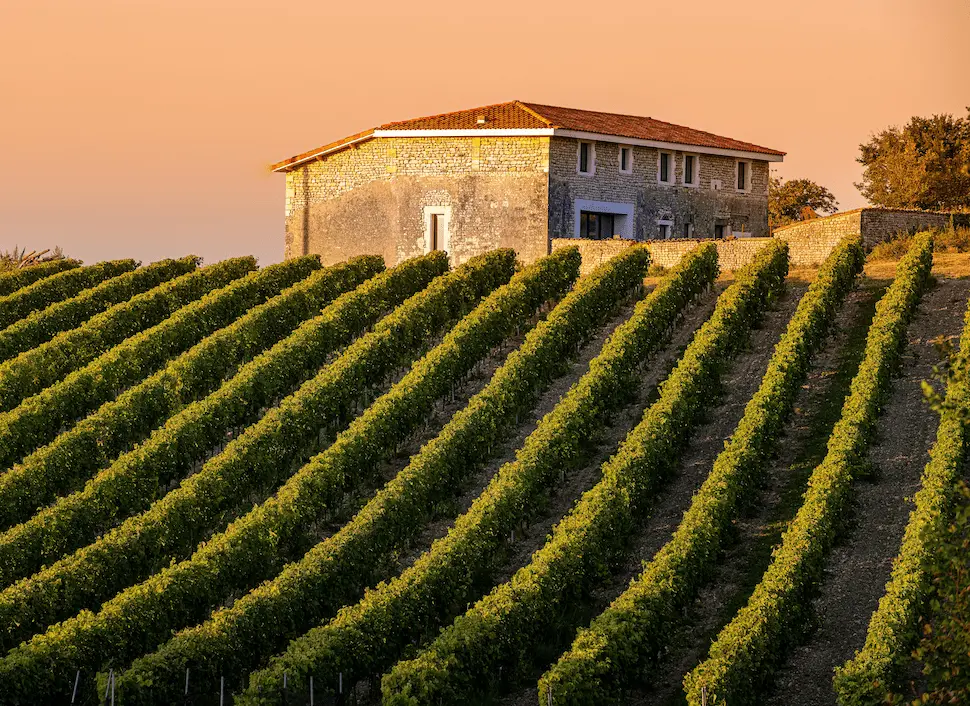
It might start over lunch at a wine estate. You’re sitting beneath a terrace awning, looking across the vines, when someone mentions that the house is for sale. By the second glass, you’re wondering how often you could get away, and which friends would come for the first weekend. Buying a vineyard gives that daydream some substantial questions.
Would you want to help make the wine, leave the work to an experienced team, or simply enjoy a home with vines beyond the kitchen window? Each involves a different budget and a different relationship with the place. Before you start arranging viewings, this guide explores where to buy, what ownership could cost and how to decide how much vineyard life you actually want to take on.
What should you consider before buying a vineyard?
Before buying a vineyard, decide how you want to use it, how much time you can give it and what you can comfortably spend on both the purchase and its upkeep. A country home with a few rows of vines and an established wine business call for very different commitments.
Picture your first year there. Would you visit for long weekends, spend summers with family or make it your main home? Consider who would look after the estate between visits and which decisions would still need your attention.
|
Your plans |
What to investigate |
|
A home with a small vineyard |
Who tends the vines, where the grapes go and what maintenance costs |
|
An established wine estate |
The business, team, equipment and stock included in the purchase |
|
Land to plant your own vineyard |
Specialist advice on suitability, establishment costs and the time before production |
How much does it cost to buy a vineyard?
The cost of buying a vineyard depends on its location, size, condition and what comes with it. You might be buying a house with a few planted acres, or an estate with a winery, equipment and an established business. Compare the details behind the price before deciding what represents good value.
For a concrete example, a Bordeaux estate advertised at €1.15 million when checked on 26 October 2026 included approximately 25.8 hectares of vines, two houses, winery buildings and equipment. Wine stock was to be negotiated separately. This is an individual asking price, rather than a market average or completed sale price, but it shows how much can sit within one purchase
|
Budget |
What to include |
|
Buying the estate |
Agreed price, applicable taxes, legal fees, surveys and finance costs |
|
Making it your home |
Repairs, furnishings and improvements to the residence |
|
Taking over the vineyard |
Specialist inspections, equipment, any separately priced stock and immediate work |
|
Keeping funds available |
Property upkeep, vineyard management and cash to meet business expenses where applicable |
If you are considering planting new vines, request a separate establishment budget. Buying land and creating a vineyard involves different expenditure from taking over an existing operation. Ask the selling agent for a written breakdown of what is included, then have the property and vineyard assessed by the appropriate specialists. Leave room for the life you want there, too: the purchase should allow you to enjoy the house while comfortably meeting the responsibilities beyond the terrace.
Where could you buy a vineyard?
England, France and Italy offer different starting points. Choose a location around how often you will visit and the kind of operation you want to own. Somewhere you can reach for three nights may become a bigger part of your life than an estate you only visit each summer.
England: a vineyard within reach of everyday life
Kent, Sussex, Essex, Hampshire and Surrey are England’s five largest wine-producing counties by planted area. If you want to remain involved while keeping your existing home or career, these offer starting points for your search. Picture leaving work on Friday and arriving in time for dinner. Test the journey to each property: the last stretch of country road matters as much as the nearest station.
France: find your place within a wine region
Around Bordeaux, explore the Médoc, Entre-deux-Mers and Saint-Émilion; Burgundy offers the Côte Chalonnaise and Mâconnais. Stay nearby before deciding. Find somewhere for breakfast, drive to the shops and explore the nearest town. Ask a local specialist to explain the vineyard’s designation and production arrangements before comparing asking prices.
Italy: choose somewhere you want to spend time
You might picture an Italian farmhouse with room for family, a terrace for late dinners and a town you gradually get to know. Consider how much driving each stay would involve and who could handle problems while you are away.
What is everyday life on a vineyard like?
Life on a vineyard combines a country home with a working landscape. There is an appealing familiarity to imagine: a morning walk through the rows, friends arriving for the weekend and supper outside as the light changes. You may find yourself following the weather and noticing how the vines have changed since your last visit.
Ask where machinery moves, when teams need access and whether deliveries pass close to the house. Walk the routes between private gardens, working buildings and any guest accommodation. The position of a terrace matters if you are hoping for quiet mornings. Visit during a busy working period and outside summer. Ask the manager to describe an ordinary week, including decisions that would reach you. Understanding that rhythm helps you judge whether the estate suits your household.
Can you own a vineyard without making the wine yourself?
Yes, owning a vineyard does not mean you have to become its winemaker. Depending on the property and local services available, you could investigate employing a vineyard manager, using specialist contractors, selling the grapes or having wine produced by an external winery.
Perhaps you want to follow the growing season, join in occasionally and eventually pour your own wine for friends. You may also want to keep your career, travel freely and arrive without a list of urgent jobs. Be clear about that balance when discussing an estate with its agent and existing team.
Start by asking how the vineyard currently operates:
- Who looks after the vines? Establish which tasks employees or contractors handle and whether they would continue after the sale.
- Where do the grapes go? Find out whether they are sold, processed elsewhere or made into wine on the estate.
- Who handles the wine business? If bottles are sold, identify who manages production, storage, distribution and customers.
- What still needs your approval? Agree who controls spending, appoints contractors and responds when plans change
How much does it cost to run a vineyard?
Running costs depend on the planted area, condition of the vines, staffing and how the grapes are used. Maintaining vines around your home involves a different budget from producing, bottling and selling wine. Request figures for the estate you are considering, including costs that continue when you are away.
|
Cost area |
What to establish |
|
Looking after the vines |
Labour, pruning, seasonal treatments, ground maintenance and specialist advice |
|
Harvesting |
Picking arrangements, equipment, transport and any contractor charges |
|
Making and selling wine, if planned |
Winemaking, storage, bottles, labels, distribution and sales |
|
Maintaining the estate |
House repairs, outbuildings, access roads, utilities, insurance and grounds |
|
Managing ownership |
Management fees, accounting, professional advice and borrowing costs, where applicable |
Ask for several years of expenditure records and identify work the owners do themselves. Obtain quotes for replacing that labour. Allow separately for major work: ask specialists to assess the vines, equipment and buildings. An annual maintenance figure tells you little about a roof that needs replacing.
Is a vineyard a good investment?
A vineyard’s financial performance depends on its purchase price, operating costs, income and eventual resale value. Enjoying the house and sharing your own wine can make ownership rewarding, but neither establishes a financial return. Ask who buys the wine or grapes and what remains after expenses.
For an operating estate, have an independent accountant and vineyard specialist examine:
- Trading performance: several years of accounts, including weaker seasons.
- Sales: achieved prices, customer relationships and any distribution or grape-purchase agreements.
- Stock: how wine is valued, when it might sell and the cost of storing it.
- Future expenditure: work needed on vines, machinery, buildings and production facilities.
- Management: whether the business remains viable after paying others for work the seller currently does.
Keep your personal plans in the calculation. Reserving accommodation for friends, reducing visitor activity or changing production may affect the income shown in the seller’s figures. Your forecast should reflect the estate you intend to run.
Have advisers model a disappointing harvest, slower sales and an unexpected repair. Include the effect of your plans, such as reserving guest accommodation for friends. Property values and business income can fall as well as rise, and selling may take time. Enness does not provide investment advice; obtain independent financial advice and specialist commercial due diligence before relying on projected returns.
How can you finance a vineyard purchase?
Finance may be available for a vineyard purchase, depending on your circumstances, the property and any business included in the sale. A house surrounded by vines and an operating wine estate can require different lending approaches, so explore borrowing while you are building your shortlist.
To begin assessing potential options, your adviser will need:
- The estate details: location, price, land area, buildings and what is included.
- Your intended use: a main home, occasional retreat or actively managed business.
- Your finances: available deposit, income, assets and existing borrowing.
- Business information: accounts, forecasts and management arrangements, where relevant.
- Your timetable: purchase deadlines and any immediate expenditure.
Depending on the case, discussions could involve specialist agricultural or commercial lenders, or a private bank assessing your wider finances. Availability needs to be established for the specific purchase.
For an overseas estate, consider how the loan currency would fit your income. Exchange-rate movements could increase repayments in your home currency, adding pressure to the ownership budget.
Before committing, establish what remains subject to valuation, legal checks and lender approval. Enness can explore potential borrowing routes, but funding is not guaranteed. Your property, or other assets used as security, may be repossessed if you do not keep up repayments. Borrowing secured on a UK property that you, or a close family member, will live in may be a regulated mortgage contract. Commercial, agricultural and business lending, and lending secured on property outside the UK, is typically not regulated by the FCA, so FCA protections may not apply. Enness may charge a fee for its services; any fee will be explained before you proceed.
What should you check before making an offer?
Before making an offer on a vineyard, establish exactly what you are buying, whether it suits your plans and what expenditure lies ahead. Ask an independent local lawyer to explain when an offer, deposit or agreement becomes binding.
Ask the appropriate specialists to investigate:
- The property and land: ownership boundaries, access, water supplies and any rights allowing others to use the estate.
- The vines: their condition, planting records, production history and any work or replacement needed.
- The buildings: the house, winery and outbuildings, including likely repairs.
- The sale contents: equipment, wine stock, brand names and other business assets, where applicable.
- Existing commitments: staff arrangements, management contracts and agreements with grape buyers, wineries or distributors.
- Your intended use: whether plans for accommodation, tastings, events or alterations are permitted.
- The purchase timetable: outstanding finance conditions, payment deadlines and when responsibility passes to you.
Request a handover plan. Establish who holds keys, which contractors need paying and whether the existing team will stay. Knowing who to call makes it easier to settle in and enjoy the estate.
Important information: This article is for informational purposes only and does not constitute financial advice. Your home may be repossessed if you do not keep up repayments on a mortgage. Think carefully before securing other debts against your home. Your property may be repossessed if you do not keep up repayments on a secured loan. Lending is subject to individual circumstances, lender criteria and due diligence. Not all lending is regulated by the FCA. Enness is a broker, not a lender, and does not provide tax, legal or investment advice.
Written by Islay Robinson